Nigeria’s smartphones are more than just communication devices – they’ve become mini offices and money-making machines. With 193.9 million mobile connections (about 87.7% of Nigerians) and 122.5 million internet users, many Nigerians are tapping into “phone hustles” – side gigs you can run entirely from your handset. Indeed, experts note that “making money with your phone in Nigeria is feasible and increasingly accessible”. In this post we’ll explore 10 legit phone hustles in Nigeria that you can start today – from freelancing and online selling to social media gigs and surveys – all with just your smartphone.
In Nigeria’s booming mobile economy, your phone can be a portable office. As one report observes, “smartphones are a key part of modern businesses”, so it makes sense to turn each call, post or click into income. The hustles below leverage that reality. Dive in and see which ones fit your skills and schedule.
1. Freelancing and Micro-Gigs
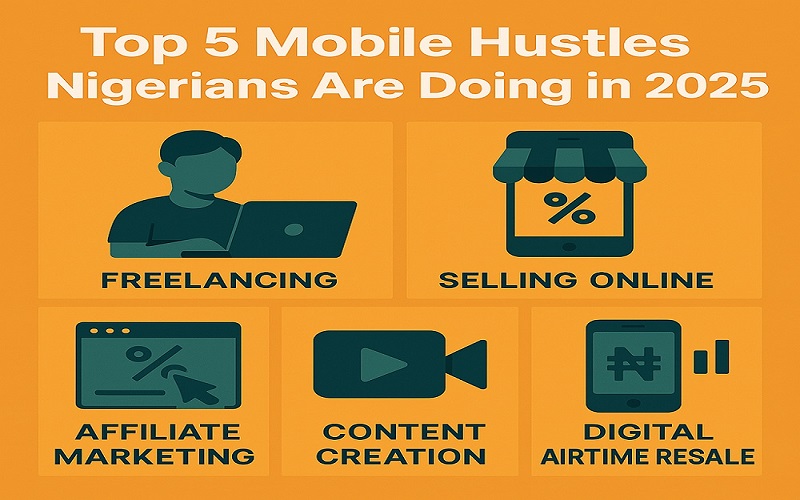
Freelancing is one of the most popular phone-based hustles. You can offer your skills – writing, graphic design, programming, video editing, translation, voice-overs and more – on global gig platforms like Upwork, Fiverr, and PeoplePerHour. Nigerians have a strong presence on these sites: as one report notes, “platforms like Upwork and Fiverr provide Nigerians with a steady income source…from graphic design to programming”. No startup capital is required – just your time and expertise.
- How it works: Create a freelancer profile listing your skills (e.g. content writing, data entry, CAD design). Browse job listings or bid on projects that match.
- Tools: Use apps like Upwork and Fiverr (available on mobile), and free tools such as Google Docs, Canva or Grammarly to polish your work.
Example: Sign up on Upwork and start by offering simple services like article writing or logo design. As you earn good reviews, you can raise your rates. Even student writers and designers can earn a few thousand naira per gig to start.
2. Selling Products Online
Your phone can be your store. E‑commerce marketplaces are thriving in Nigeria, allowing anyone to buy and resell goods or even launch a mini-shop. You can sell new or used items – from clothes and electronics to handcrafted goods – using your phone. Major platforms include Jumia and Konga, which give sellers access to millions of online customers. Locally, people also use Jiji, OLX, Facebook Marketplace, WhatsApp groups or even Instagram to buy and sell items.
- Tips: Take good photos of your products with your phone camera. Write clear descriptions and post regularly. Many sellers also use broadcast lists or social media to reach customers.
- Platforms: Jumia and Konga have mobile apps for vendors. Instagram/Facebook Shops let you set up a storefront.
Example: You might buy well-priced thrift clothes or gadgets at a local market, then resell them through WhatsApp groups or Jiji. Or design e-books, calendars or printables and sell digital downloads via social media. With effective marketing (e.g. sharing in community groups), this phone hustle can be very profitable.
3. Content Creation & Influencing
If you love creating content, use it to earn! Nigerians are making money on social media and video platforms by influencing and creating content. Whether it’s short TikTok reels, Instagram photo reels, or YouTube videos, you can monetize an engaged audience. As one report notes, “blogging, streaming, and social media influencing have become viable career paths” in Nigeria. People earn through ads, sponsored posts and affiliate links once they have a following.
- Platforms: YouTube, TikTok, Instagram, Facebook.
- Monetization: In-stream ads (Google AdSense on YouTube), brand partnerships, sponsored content and affiliate links.
For example, a Nigerian who regularly posts entertaining or educational videos can join YouTube’s Partner Program to earn ad revenue. Instagram or TikTok influencers often partner with brands for paid promotions. Nigeria’s large English-speaking audience is a plus: content in English can attract both local and international viewers.
4. Online Tutoring and Coaching
Teaching can be done entirely from your phone. If you excel in a school subject (math, English, science) or skill (coding, graphic design, music), you can tutor students online. Advertising is often done via WhatsApp groups or social networks. Tutors might use Zoom or Google Meet to hold lessons. According to Pulse Nigeria, tutors can “teach secondary school subjects, exam prep or basic computer skills over Zoom…charging ₦2,000 to ₦5,000 per hour”. Group lessons (e.g. small class of students) can boost your hourly earning.
- Getting started: Join platforms like Tuteria or Preply, or simply post your services on social media.
- Tools: Use WhatsApp, Zoom or Google Meet for sessions; Canva or a tablet app for writing on-screen.
- Payment: Many tutors collect payment via bank transfer or mobile money after each session.
Online tutoring helps others learn while building your own reputation. Over time, word-of-mouth can fill your schedule, and success stories will attract more students.
5. Virtual Assistance
Small businesses and entrepreneurs often need help with admin tasks – and they’re willing to pay for it. As a virtual assistant, you can handle tasks like email management, calendar scheduling, customer follow-up, data entry, or booking appointments – all from your phone. You’d basically become someone’s remote helper. Pulse Nigeria notes that many entrepreneurs need assistance with things “like managing email, scheduling appointments, entering data and following up with customers”.
- Get clients: Offer services on freelance sites or reach out to small businesses directly on LinkedIn or Facebook.
- Tools: Use free apps like Google Calendar/Gmail, Trello or Asana to organize your work.
- Payment: Charge by the hour or offer fixed packages. Reliable, quick responses often lead to steady work.
This hustle has low barriers to entry – no special degree needed, just trustworthiness and good communication. Even if you only check emails and update spreadsheets, it all adds up.
6. Social Media Management
Related to virtual assistance, businesses need people to run their social media. As a social media manager, you create and schedule posts, engage with followers, and analyze results. Many Nigerian startups and shops hire freelancers to handle their Facebook, Instagram or Twitter accounts. According to Pulse Nigeria, graduates can “curate content calendars, design graphics in Canva and track engagement for small businesses”. You’d manage one or more accounts from your phone, replying to comments, posting updates, and using your knowledge of local trends (memes, holidays, slang) to make content resonate.
- Skills needed: Creativity, basic design (Canva app), and social media know-how.
- How to pitch: Share examples of posts or run a side project (like a themed Instagram page) to show your skills.
- Payment: Often a monthly fee per account. Building good results (more likes or sales) can get you referrals for more clients.
Social media management turns your time on Instagram or Twitter into work time. Plus, you keep up with trends and learn marketing on the job.
7. Affiliate Marketing
You can earn commission by recommending products through your social channels. In affiliate marketing, you share a unique link or code for a product, and earn a cut when someone buys. In Nigeria, common affiliates include e-commerce sites and digital services. Pulse advises promoting “trusted products such as airtime, online courses or fashion items” through your social accounts. For example, Jumia’s affiliate program lets you earn money by advertising deals; or you might join a book publisher’s affiliate, or fintech referral.
- How it works: Sign up for an affiliate program (e.g. Jumia, Konga, or local course platforms). Promote products with your link on social media or WhatsApp. Earn per sale or per referral.
- Tips: Be genuine in recommendations. Build trust so that followers act on your links. Over time, you earn passive income as old posts continue to bring in sales (Shopify notes affiliate links are a form of passive income).
Affiliate marketing requires little capital and can run alongside other hustles. As you attract followers or email contacts, even recommending simple products like air-time or data plans can bring steady naira income.
8. Paid Surveys & Microtask Apps
If you have spare minutes, try apps that pay for simple tasks. For example, survey panels like TGM Panel Nigeria or international ones pay you to answer market-research surveys. TGM Panel advertises that “by filling out a single survey you can earn up to 2.50 USD”. Likewise, apps like Swagbucks (known globally) let you earn gift cards or cash by taking surveys or watching short videos.
Beyond surveys, there are microtask and user-testing apps. Some pay you to test websites or apps and give feedback (e.g. Tapestri, Nielsen Computer & Mobile Panel). Others pay for fun actions: for instance, Mistplay rewards you for playing mobile games and redeeming points for gift cards. Similarly, Honeygain pays you for sharing a bit of your internet bandwidth. These won’t replace a salary, but they’re quick ways to earn a few extra naira in your downtime.
- Key apps: TGM Panel (Nigeria), Triaba, Swagbucks, Pollpay.
- Tips: Do multiple platforms to increase your earnings. Read reviews to avoid scams – stick to well-known survey apps.
While individually small, survey and microtask pay-outs add up over time. Many Nigerian students and stay-at-home parents use these hustles to pad their wallets with little effort.
9. Stock Photography & Digital Design
Believe it or not, your phone’s camera can make you money. Stock photo websites like Shutterstock, iStock and Adobe Stock pay photographers when their photos are downloaded by businesses or media. With today’s high-quality phone cameras, even amateurs can sell amazing shotsshopify.com. If you have a good eye, use your phone to capture Nigerian life – cityscapes, markets, people at work – then upload to stock sites for passive earnings.
Similarly, you can create digital designs on mobile: use apps like Canva or Adobe Spark to make e-cards, printable art or social media templates. Sell these on marketplaces like Etsy or Gumroad, or offer them to local businesses. The Shopify team reminds us that “virtually anyone can capture and sell professional-grade images” thanks to smartphonesshopify.com.
- Tools: Canva, Adobe Lightroom (mobile), or any camera app.
- Platforms: Shutterstock Contributor app, Dreamstime, Adobe Stock.
This hustle often pairs well with content creation: e.g. a food blogger selling recipe photos, or a graphic designer offering templates. It’s completely location-independent and can yield continuous income as long as your images sell.
10. Digital Airtime/Data Reselling
In Nigeria, there’s also a simple phone-based business in reselling mobile data or airtime. Several apps let you become a mini airtime vendor with little to no capital. For example, platforms like VTU.ng or Prestmit allow you to buy data bundles in bulk at discounted rates, then sell them to friends or customers at a small markup. Every time someone purchases a top-up from you, you keep the profit. It works like a commission model for mobile credits.
- How it works: Sign up on a data vending app. Use your phone to buy data airtime at wholesale prices. Sell this airtime privately (via recharge code) to customers.
- Benefits: No inventory and instant mobile transfers. It’s essentially acting as a digital kiosk from your phone.
Many students and market traders in Nigeria earn pocket money this way. With steady demand for phone credit (for calls and internet), a reliable vendor can make a tidy profit over time, all from smartphone transactions.
Conclusion
Nigerian smartphones are not just for chatting – they’re income engines. From freelancing and social media gigs to selling goods and tutoring, the hustles above show that a phone and internet connection are often enough to start earning in today’s Nigeria. As one expert summary puts it, whether you’re freelancing, running an e-commerce store or taking surveys, “the opportunities are diverse and cater to different skills and interests”.
Ready to take action? Pick one hustle above that matches your skills or passion, and start today. For instance, create an Upwork profile, post your first product on Jiji, or sign up for a survey app like TGM Panel. As you build experience and credibility, earnings will grow.
Call to Action: Have you tried any of these phone hustles? Share your experience or plans in the comments below. Feel free to share this post with friends who are looking to earn extra naira. Every great business starts with a single step – maybe your next ₦10,000 is just a click away!